Wild Horses of Namibia
Namib Desert Horses
During my travels through Namibia, I was fortunate enough to witness the wild horses of the Namib Desert — an experience that touched my soul far more deeply than I expected.
The horses are among the most mysterious animals in Africa. Living in one of the harshest environments on Earth, these resilient horses roam the gravel plains near Garub, surviving intense heat, scarce water, and relentless desert winds. Their origins remain uncertain, with stories linking them to escaped cavalry horses, abandoned farm stock, and remnants of colonial history.
What makes the Namib Desert horses so captivating is not only their beauty, but their extraordinary endurance. Against all odds, they have adapted to a landscape where survival itself is remarkable. Watching them move across the endless dunes and open plains feels almost surreal — a rare glimpse of untamed freedom in one of the world’s oldest deserts.
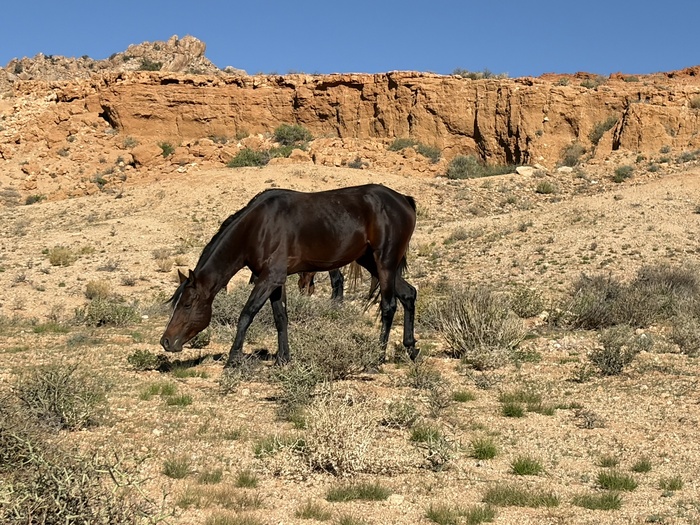
Today, the horses have become a symbol of resilience and a unique part of Namibia’s natural heritage, attracting photographers, wildlife enthusiasts, and travellers from around the world eager to witness this extraordinary phenomenon for themselves.
I have always loved observing horse behaviour in domestic horses, but witnessing truly wild horses roaming freely through the Namib Desert felt like an extraordinary privilege. Even then, nothing fully prepared me for the experience of sitting quietly at the Garub waterhole as the desert evening slowly settled across the plains.
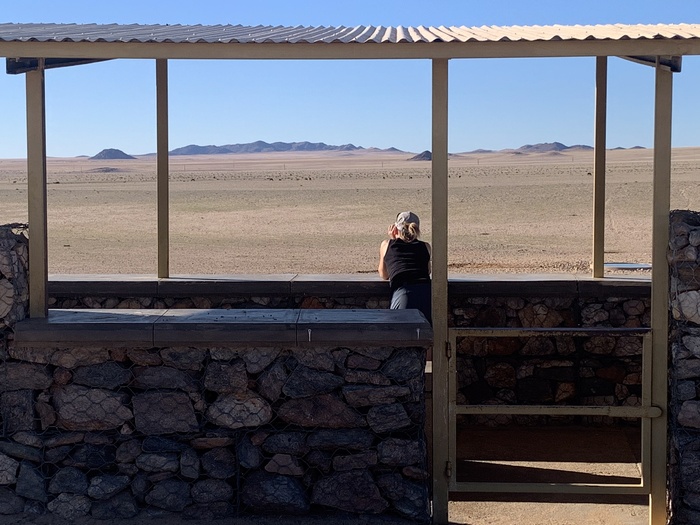
The desert was already slipping into evening when we arrived at the Garub waterhole, the air still warm from the day’s heat and the silence so complete that every hoofstep carried across the plains. Watching the Namib Desert Horses that afternoon became one of the most unforgettable wildlife experiences I have ever had. I could easily have stayed there for hours longer, completely absorbed in the quiet drama unfolding around the water.
Each arriving herd felt like the beginning of a new chapter in an unfolding story.
The first group consisted of four horses — three mares and a stallion. The mares approached cautiously, moving in a zigzag pattern as they neared the waterhole, each eye seemingly scanning a different direction for danger. As they reached the water, they instinctively spread themselves evenly around the circular pool so that, together, they could watch every angle of the surrounding desert.
Behind them stood the stallion, proud and vigilant, watching over his harem while making certain no rival males came too close to his mares.
Only once the mares had finished drinking and slowly drifted towards a patch of sparse grass did the stallion approach the water himself. Even then, he kept one eye fixed on them as they wandered away. After drinking deeply, he lifted his head, droplets falling from his muzzle, before gracefully cantering after them through the dust.
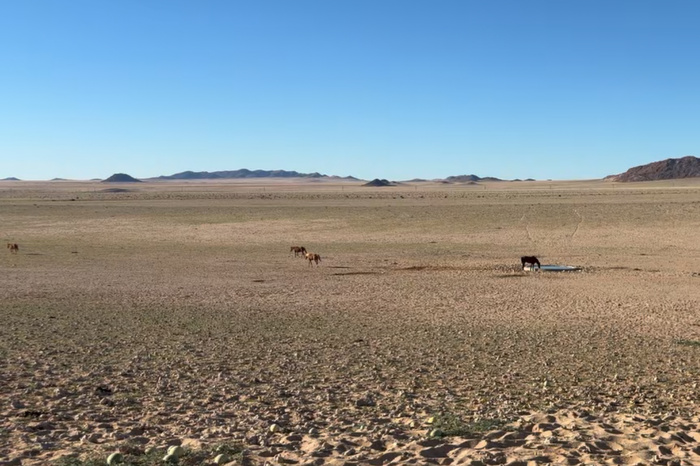
For a while the waterhole fell quiet again, the only sound was the whisper of the desert wind.
Then came a lone old stallion.
He drank slowly and deeply, lingering longer than the others, before turning away and disappearing back into the vast emptiness alone.
The next arrivals changed the atmosphere completely.
A younger group of four burst onto the scene — three fillies and a chestnut colt, perhaps around two years old. Unlike the older horses, they didn’t simply drink and move on. They splashed through the shallows and played with the carefree energy of teenagers testing their independence.
Yet even from a distance, there was tension.
Three mature stallions followed them across the desert and it was obvious the youngsters were beginning to reach sexual maturity.
Before long, the stallions erupted into a fierce but magnificent confrontation — rearing, squealing and boxing with one another in clouds of dust. It clearly wasn’t their first battle. All three bore scars, and two moved with a noticeable limp, reminders of previous fights fought under the relentless desert sun.
Meanwhile, not far from the commotion, the young horses continued their playful frolicking, seemingly oblivious to the politics unfolding around them. Occasionally one would whinny loudly, almost as though searching for a missing companion.
Then, over the ridge, another young colt appeared alone.
He looked around the same age as the chestnut colt, awkward and uncertain, as though he no longer fully belonged anywhere. One of the fillies trotted over to greet him. They touched noses gently and scratched one another affectionately for a moment before his behaviour suddenly became more “colty.” After a squeal and a swift kick from the filly, she turned and rejoined her group, leaving him standing there alone once more.
I found myself wondering whether he had only recently been driven from his herd.
As he passed the older stallions on his way to drink, one watched him sternly, almost like an uncompromising guardian enforcing the rules of adulthood.
Unexpectedly, I felt tears well in my eyes watching that young colt standing alone at the waterhole. He looked lonely, confused and caught somewhere between youth and maturity.
I suspect the playful chestnut colt will soon face the same fate and be pushed away from the fillies as well. I found myself quietly hoping the two youngsters might eventually find one another again and form a bachelor herd together.
Nature can feel especially harsh when viewed through the lens of adolescence.
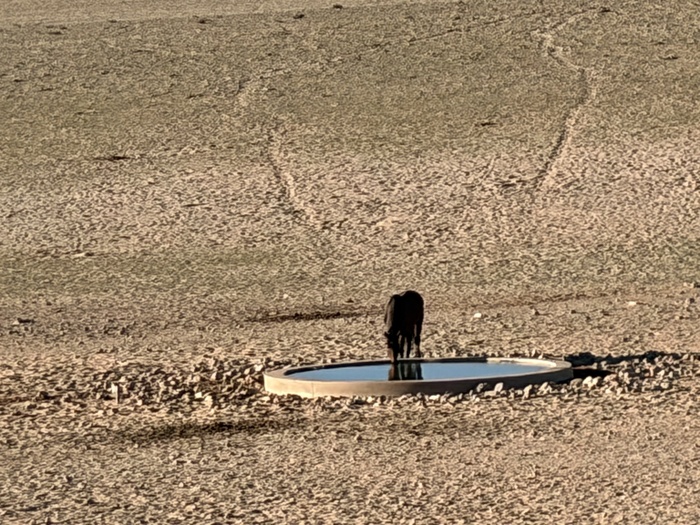
As the afternoon faded towards sunset, the final group arrived — a peaceful family herd of mares, foals and a stallion. This time the atmosphere was entirely different. The stallion drank first, followed calmly by the mares and their foals. There was no tension, no posturing, no fighting. They seemed settled and content in one another’s company, perhaps because there were no ovulating mares to guard or compete over.
Golden light spread across the desert as the sun sank lower, turning the dust and the horses’ coats to shades of amber and bronze. The air became cooler, while the horses gradually disappeared back into the endless Namib.
I could have stayed there for hours longer.
Watching their body language, social hierarchies and quiet interactions felt deeply intimate — like being allowed a brief glimpse into a hidden world. It was far more emotional than I expected and without doubt a couple of hours I will never forget.
During my travels through Namibia, I was fortunate enough to witness the wild horses of the Namib Desert — an experience that touched my soul far more deeply than I expected.
The horses are among the most mysterious animals in Africa. Living in one of the harshest environments on Earth, these resilient horses roam the gravel plains near Garub, surviving intense heat, scarce water, and relentless desert winds. Their origins remain uncertain, with stories linking them to escaped cavalry horses, abandoned farm stock, and remnants of colonial history.
What makes the Namib Desert horses so captivating is not only their beauty, but their extraordinary endurance. Against all odds, they have adapted to a landscape where survival itself is remarkable. Watching them move across the endless dunes and open plains feels almost surreal — a rare glimpse of untamed freedom in one of the world’s oldest deserts.
Today, the horses have become a symbol of resilience and a unique part of Namibia’s natural heritage, attracting photographers, wildlife enthusiasts, and travellers from around the world eager to witness this extraordinary phenomenon for themselves.
I have always loved observing horse behaviour in domestic horses, but witnessing truly wild horses roaming freely through the Namib Desert felt like an extraordinary privilege. Even then, nothing fully prepared me for the experience of sitting quietly at the Garub waterhole as the desert evening slowly settled across the plains.
The desert was already slipping into evening when we arrived at the Garub waterhole, the air still warm from the day’s heat and the silence so complete that every hoofstep carried across the plains. Watching the Namib Desert Horses that afternoon became one of the most unforgettable wildlife experiences I have ever had. I could easily have stayed there for hours longer, completely absorbed in the quiet drama unfolding around the water.
Each arriving herd felt like the beginning of a new chapter in an unfolding story.
The first group consisted of four horses — three mares and a stallion. The mares approached cautiously, moving in a zigzag pattern as they neared the waterhole, each eye seemingly scanning a different direction for danger. As they reached the water, they instinctively spread themselves evenly around the circular pool so that, together, they could watch every angle of the surrounding desert.
Behind them stood the stallion, proud and vigilant, watching over his harem while making certain no rival males came too close to his mares.
Only once the mares had finished drinking and slowly drifted towards a patch of sparse grass did the stallion approach the water himself. Even then, he kept one eye fixed on them as they wandered away. After drinking deeply, he lifted his head, droplets falling from his muzzle, before gracefully cantering after them through the dust.
For a while the waterhole fell quiet again, the only sound was the whisper of the desert wind.
Then came a lone old stallion.
He drank slowly and deeply, lingering longer than the others, before turning away and disappearing back into the vast emptiness alone.
The next arrivals changed the atmosphere completely.
A younger group of four burst onto the scene — three fillies and a chestnut colt, perhaps around two years old. Unlike the older horses, they didn’t simply drink and move on. They splashed through the shallows and played with the carefree energy of teenagers testing their independence.
Yet even from a distance, there was tension.
Three mature stallions followed them across the desert and it was obvious the youngsters were beginning to reach sexual maturity.
Before long, the stallions erupted into a fierce but magnificent confrontation — rearing, squealing and boxing with one another in clouds of dust. It clearly wasn’t their first battle. All three bore scars, and two moved with a noticeable limp, reminders of previous fights fought under the relentless desert sun.
Meanwhile, not far from the commotion, the young horses continued their playful frolicking, seemingly oblivious to the politics unfolding around them. Occasionally one would whinny loudly, almost as though searching for a missing companion.
Then, over the ridge, another young colt appeared alone.
He looked around the same age as the chestnut colt, awkward and uncertain, as though he no longer fully belonged anywhere. One of the fillies trotted over to greet him. They touched noses gently and scratched one another affectionately for a moment before his behaviour suddenly became more “colty.” After a squeal and a swift kick from the filly, she turned and rejoined her group, leaving him standing there alone once more.
I found myself wondering whether he had only recently been driven from his herd.
As he passed the older stallions on his way to drink, one watched him sternly, almost like an uncompromising guardian enforcing the rules of adulthood.
Unexpectedly, I felt tears well in my eyes watching that young colt standing alone at the waterhole. He looked lonely, confused and caught somewhere between youth and maturity.
I suspect the playful chestnut colt will soon face the same fate and be pushed away from the fillies as well. I found myself quietly hoping the two youngsters might eventually find one another again and form a bachelor herd together.
Nature can feel especially harsh when viewed through the lens of adolescence.
As the afternoon faded towards sunset, the final group arrived — a peaceful family herd of mares, foals and a stallion. This time the atmosphere was entirely different. The stallion drank first, followed calmly by the mares and their foals. There was no tension, no posturing, no fighting. They seemed settled and content in one another’s company, perhaps because there were no ovulating mares to guard or compete over.
Golden light spread across the desert as the sun sank lower, turning the dust and the horses’ coats to shades of amber and bronze. The air became cooler, while the horses gradually disappeared back into the endless Namib.
I could have stayed there for hours longer.
Watching their body language, social hierarchies and quiet interactions felt deeply intimate — like being allowed a brief glimpse into a hidden world. It was far more emotional than I expected and without doubt a couple of hours I will never forget.